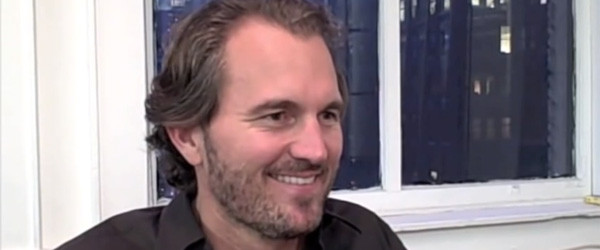
Peter Thum is who you would call a serial social entrepreneur. His story begins at McKinsey in 2000, working at the time on a consulting project in South Africa and meeting people without access to clean water. He would quit his job in 2002 and move to New York to start Ethos Water – a bottled water company that funds water initiatives – with Jonathan Greenblatt, who is currently the Special Assistant to the President and Director of the Office of Social Innovation and Civic Participation at the White House.
In 2004, Ethos had been trying to get Starbucks as a customer but was unsuccessful, until Pierre and Pamela Omidyar invested in the company and asked what they needed. Thum asked for an introduction to Howard Schultz.
Eventually they met with Schultz who showed interest in the company. Following a series of meetings, Starbucks said they wanted to buy the company and ultimately grew it to a multinational brand. Expanded profits allowed Starbucks to double donations per bottle sold to support water projects.
Thum left Starbucks in 2008 to begin a new project also inspired by Africa. He saw boys and young men armed with assault rifles and decided he wanted to disarm them. Fonderie 47 was founded to recycle guns into high-end jewelry and art. Every piece sold would incorporate metal from an AK-47 and be engraved with the serial number of the destroyed weapon. The company boasts of more than 34,000 assault rifles removed from conflict and post-conflict regions to date.
It’s difficult not to think about the US when referring to gun violence, so Thum took it a step further on the advice of his wife. Liberty United launched in 2013 to transform illegal guns and bullets in the US into jewelry and art. As the company describes, “Gun violence is rampant in the United States, but it doesn’t have to be.”
Thum was recently asked in an interview with The Motley Fool how he would grade corporate America on addressing the needs of all stakeholders – customers, employees, shareholders, vendors, and the world.
“Publicly traded companies are really built to serve shareholders,” he said. “The best competitors in an industry will get an ‘A’ in this category, based on whether they are delivering the results that the shareholders hoped for when they bought the stock. All other stakeholder considerations are subordinate and are managed to optimize the operation to deliver on their strategy and related objectives. If the companies get A grades by serving these other groups it is because it is competitively expedient.”
Thum suggests that companies who can “win the future” are the ones that invent “engines that have zero greenhouse gas emissions, foods that make our taste buds deliriously happy but don’t give us diabetes, and so forth”. Companies would have to go beyond not doing any damage or beyond reducing negative impact for the survival of the human race through the next century if rising economies are to consume and strive to consume at the same level of people living in the US.
Purpose is critical to success, he adds, and rather than seeing it as a responsibility, it is an opportunity for companies.
Finally, to striving social entrepreneurs, he advises, “Pursue your idea as soon as you can. Make your product and try to sell it to someone. If it works, you’re in business and you can iterate; if it doesn’t you can figure out why and try again.”